Cocktail education
What Is a Negroni? Ratio, History and How to Fix a Bad One
The short answer
A Negroni is equal parts gin, sweet vermouth and Campari. Stir it with ice, strain it over a large cube, and garnish with orange. If it tastes wrong, the fix is almost always the vermouth, the dilution or the ice, not the recipe.
What is a Negroni?
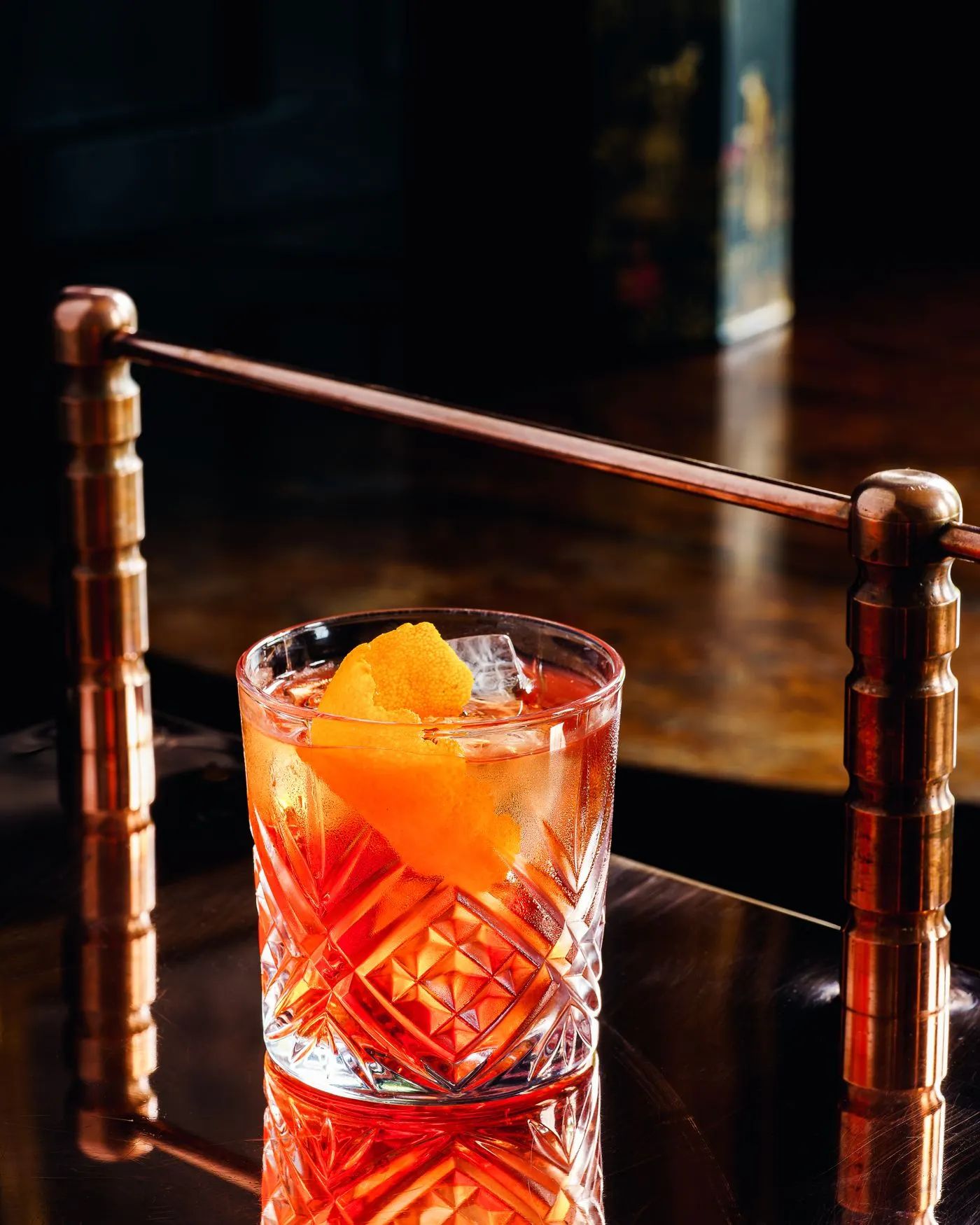
A Negroni is a classic Italian cocktail made with equal parts gin, sweet vermouth and Campari, stirred with ice and served over a large ice cube with an orange peel. It tastes bitter, sweet and herbal at once. The standard recipe is 30 ml of each, which makes it one of the easiest cocktails to remember and one of the easiest to get subtly wrong.
Where did the Negroni come from?
The Negroni was most likely created in Florence around 1919. The most widely told story is that Count Camillo Negroni asked a bartender at Caffè Casoni, Fosco Scarselli, to strengthen his usual Americano (Campari, sweet vermouth and soda water) by swapping the soda for gin. The bartender also changed the lemon garnish to orange so the new drink would look different. The story is popular rather than fully documented, so treat the exact date and details as tradition.
What is the classic Negroni ratio?
The classic ratio is 1:1:1, which is 30 ml gin, 30 ml sweet vermouth and 30 ml Campari.
The 1:1:1 Negroni
- 30 ml London dry ginThe dry, juniper backbone
- 30 ml Sweet vermouthSweetness, spice and body
- 30 ml CampariBitter orange and the signature edge
- Stir20-30 seconds
- Strainover one large cube
- Garnishorange peel, expressed
| Ingredient | Amount | What it does |
|---|---|---|
| London dry gin | 30 ml | Dry, juniper-led backbone and most of the alcohol |
| Sweet (red) vermouth | 30 ml | Sweetness, spice and body that balance the bitterness |
| Campari | 30 ml | Bitter orange, colour and the signature edge |
| Orange peel | 1 strip | Aromatic oils that make the first sip smell citrusy |
| Ice | 1 large cube for serving | Chills with slow dilution |
A Negroni has no mixer, so it is only as good as its weakest bottle. Vermouth is the one people most often neglect: it is a fortified wine, so once opened it should be kept in the fridge and used within a few weeks.
How do you make a Negroni?
- Chill a rocks glass (a few minutes in the freezer is enough).
- Fill a mixing glass two-thirds with good, cold ice.
- Add 30 ml gin, 30 ml sweet vermouth and 30 ml Campari.
- Stir for 20-30 seconds, until the outside of the glass is frosty and the drink tastes cold and slightly softened.
- Place one large ice cube in the chilled glass and strain the drink over it.
- Squeeze a wide strip of orange peel over the drink, rub it around the rim and drop it in.
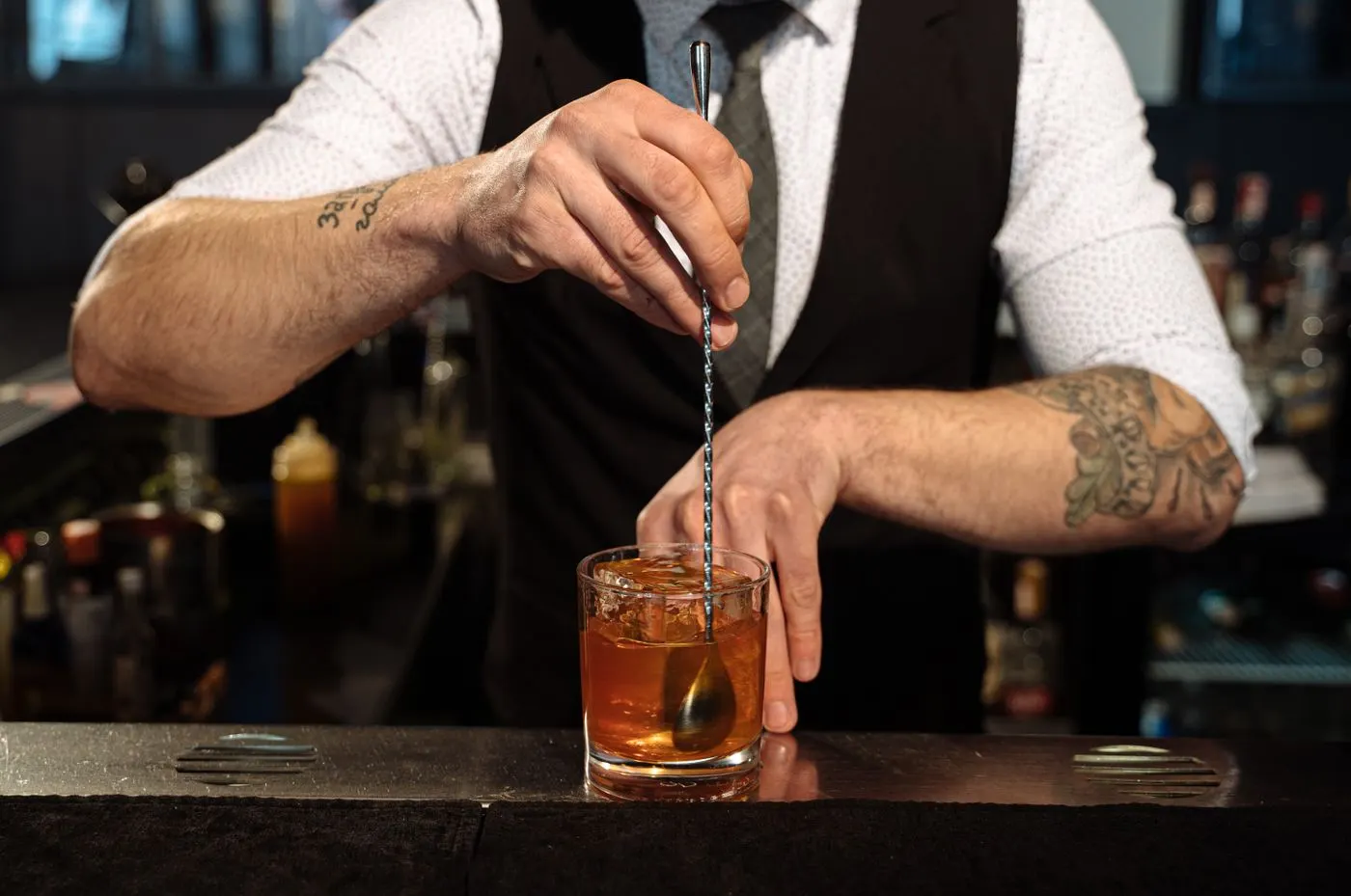
Stir, don't shake. Every ingredient is spirit-based, so shaking only over-dilutes the drink and makes it cloudy.
What are the best Negroni variations?
| Variation | What changes | Taste |
|---|---|---|
| Boulevardier | Bourbon or rye replaces the gin | Warmer, rounder, spicier |
| Negroni Sbagliato | Sparkling wine replaces the gin ("sbagliato" means "mistaken") | Lighter, fizzy, lower in alcohol |
| White Negroni | Gin, a white aperitif wine and a gentian liqueur replace the vermouth and Campari | Floral, dry, earthy-bitter |
| Mezcal Negroni | Mezcal replaces the gin | Smoky and savoury |
How do you fix a bad Negroni?
| Problem | Likely cause | Fix |
|---|---|---|
| Too bitter | Campari overpowering a thin vermouth | Use a richer sweet vermouth, or trim the Campari to 25 ml |
| Too sweet | Heavy vermouth or an old, oxidised bottle | Use fresh vermouth, or add a dash of orange bitters |
| Harsh and boozy | Not enough dilution | Stir 10 seconds longer and use colder, larger ice |
| Watery | Small or wet ice, or over-stirring | Use large, dense cubes and stop stirring when the glass frosts |
| Flat and dull | Old vermouth, no garnish oils | Open a fresh bottle and express the orange peel over the glass |
Frequently asked questions
Is a Negroni strong?
Yes, but less than it tastes. Once diluted by stirring, it lands at roughly 20-25% alcohol by volume, depending on the gin.
Why is a Negroni bitter?
The bitterness comes from Campari, which is flavoured with bitter herbs and orange peel. The vermouth and the orange garnish soften it.
Which gin is best for a Negroni?
A juniper-forward London dry gin holds up best against Campari and vermouth. Very delicate gins tend to disappear.
Can you make Negronis ahead?
Yes. Mix the three spirits in equal parts with about 20-25% water, keep the bottle in the fridge, and pour over ice to serve.
Is a Negroni an aperitif or a digestif?
It is traditionally an aperitivo, a drink to stimulate the appetite before a meal.